
How many DMs can you send on Instagram per day?
Looking for the exact number of DMs you must not go over on Instagram? There isn't one. 👀
The short answer
Instagram publishes no daily DM limit, and there is no fixed number to go and find. What exists instead is a moving ceiling, worked out account by account, that tightens or loosens depending on how you behave.
Anyone who tells you "the limit is 50 a day" is quoting a number they cannot source. 😬
In this article, we show you why a single number cannot exist, the 6 factors that actually decide your ceiling, the 4 rungs of blocking, and exactly what to do when you hit one.
Understanding how the ceiling moves is far more useful than a number you would only misapply. 💡
No single number exists — here is why
Instagram does not want a published threshold, because a published threshold becomes a target. 🎯 If everyone knew the exact figure, every spam operation would park itself one message underneath it.
So the platform enforces its limits the way most large networks do: dynamically, account by account, against a model of what normal use looks like. 2 accounts sending the same volume on the same day can be treated completely differently.
Followers and strangers are not the same message
No, and this is the widest gap on the whole list — as well as the easiest one to use to your advantage.
A DM to someone who already follows you arrives in their main inbox. Instagram treats it as a conversation between 2 people who know each other, because that is what it is.
A DM to a non-follower lands in message requests. The person has to accept it before they can even read it. And a high proportion of messages ending up there is one of the clearest automation signals in existence.
What weighs the account down
Every message goes to a stranger, all on the same day, all declined or ignored.
The account looks like a broadcaster rather than a participant. 🙃
What lightens it
Some of what you send goes to people who follow you, and those people reply. 🤩
The ratio matters as much as the count. 🔥
The practical consequence runs against instinct: getting followed before you write raises your ceiling. A follower you earn this week is a message that weighs less next week.
What actually decides your ceiling?
Account age and history. ⏱️ An account 3 weeks old and an account 4 years old with thousands of real conversations behind it are not judged the same way. This is the number one factor, and it is exactly the one people throw away when they buy a fresh account to "start clean".
Who you are writing to. A DM to someone who already follows you does not weigh what a DM to a stranger weighs. Messages to non-followers land in requests, and a high proportion of those is one of the sharpest automation signals there is.
What happens after you send. ✅ Replies are the strongest positive signal the platform has. Being ignored is neutral. Being marked as spam, blocked or reported is what gets an account restricted — not volume in itself. 100 messages that open conversations are safer than 20 that collect 3 reports.
How alike your messages are. Identical text sent to a lot of people is detected without effort. Variation is not cosmetic here, it is the mechanism.
How fast you send. No human sends 30 messages in 90 seconds. Bursts get noticed more than totals do. ⚡
Everything else the account is doing. DM limits are not calculated apart from follows, likes, comments and story views. An account doing all 5 aggressively on the same day is read as one pattern, not as 5.
Hitting the ceiling: what you actually see
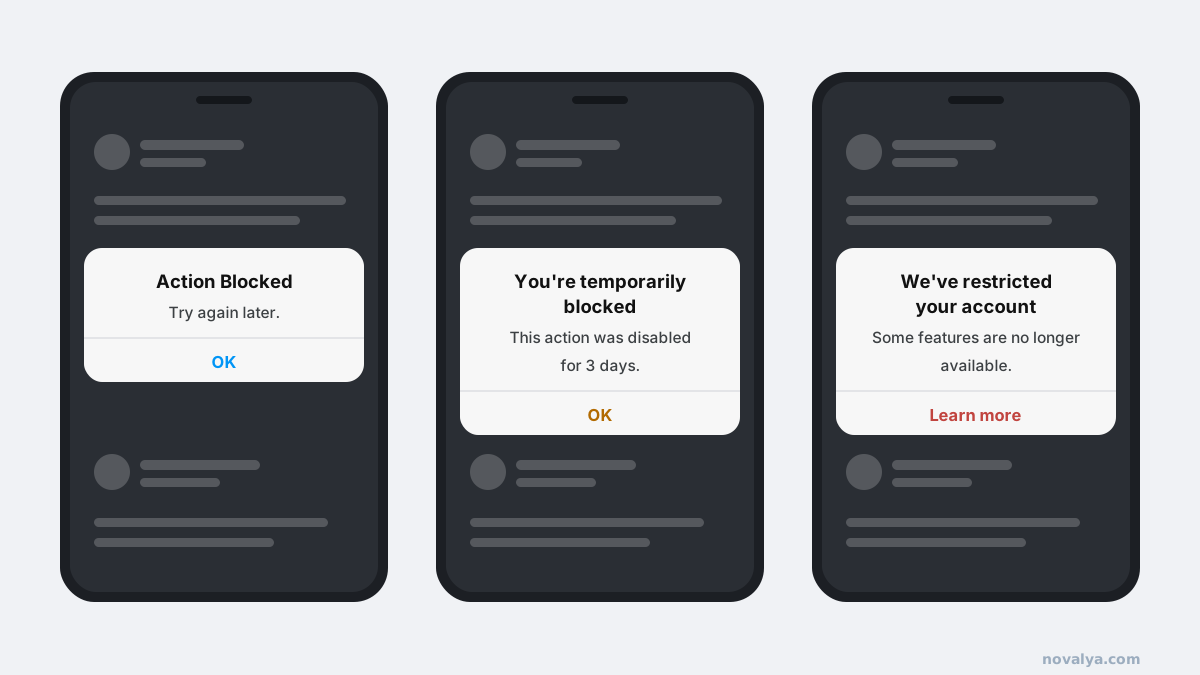
You will almost never go straight from normal use to a deleted account. The escalation is gradual, and it warns you several times:
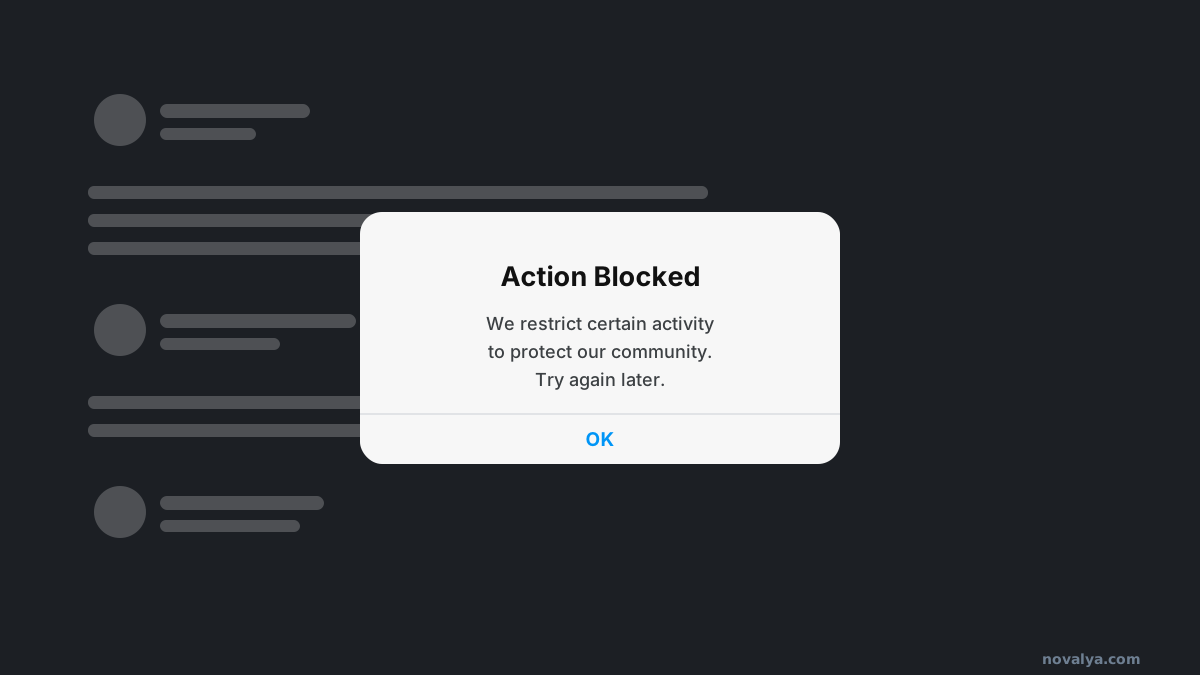
“Action blocked” or “Try again later”
A temporary restriction on a single feature, often a few hours, sometimes a day or two. It is a warning, not a punishment.
A longer restriction
This one lands if you pick the exact same behaviour back up the moment the block lifts. It is the mistake that turns an annoyance into a real problem. 😅
A feature taken away
Losing the ability to write to non-followers, for instance, while the rest of the account carries on working normally.
The account disabled
Rare, and usually the end of a run of repeated blocks — not the result of one bad day. ⚠️
Rung 1 is common and reversible. Just about everyone who prospects seriously has seen it. The people who end up on rung 4 are the ones who treated rung 1 as an obstacle instead of as information.
This particular ladder isn't unique to messaging — Instagram "Action Blocked": what it actually means covers the wider mechanism, including what else can trigger it.
The number we are willing to stand behind
Since Instagram gives no figure, the useful answer is the one an operator will put in writing.
Every Novalya plan sets a monthly cap, which you choose when you subscribe. That is not Instagram's limit — it is the range we are willing to put our name to, on a normal account with a normal history, messages spread out and never fired off in a block. The figures live on the pricing page, which is the only source that stays current when the plans move.
On top of the cap, the product spaces messages out instead of chaining them, selects message text automatically from your configured variants, skips anyone you already have a live conversation with, and refuses to write to the same person twice.
If you are still comparing options, choosing an Instagram prospecting tool comes down to whether it does exactly these things — the cap, the spacing, the variant selection — or leaves them to you.
Worth remembering
The ceiling is not a setting imposed on you, it is a score your account builds. Every incoming conversation pushes it up; every day of block sending pushes it down. 🙌
A new account's first 30 days
This is when almost every block happens, and the only stretch where no amount of good copy can save you. 😬
Week 1 — the account lives, it does not prospect
Photo, bio, a few posts, some follows in your own field. You answer the comments you get.
Zero outbound messages to strangers. The account has no history yet to set against a suspicion.
Week 2 — you talk to the people talking to you
Replies to incoming DMs, comments on other people's posts. Every inbound conversation is a positive signal the account banks.
Week 3 — 5 messages a day, to followers
People who already follow you. It is the lowest volume that means anything, and the goal is not the outcome: it is to show a normal sending pattern.
Week 4 — you climb, and you watch
10, then 15. If a block lands, you went too fast — drop back to half and wait a full week.
A month sounds long. It is still quicker than losing an account after 10 days and starting the whole thing over, history included. ⚠️
Already blocked: the protocol
Stop. Do not move to another device, another network or another account to keep going — that reads as circumvention, and it makes things worse.
Leave the feature alone for 24 to 48 hours. Use the account normally in the meantime, then come back at a volume lower than the one before, not the same.
If the block returns straight away, the ceiling on that account is lower than you thought. The answer is to send less, not to send from somewhere else.
The part most articles leave out
Automated sending is not something Instagram encourages.
Meta's terms govern automated access and automated collection, and every tool in this category — ours included — works in a space the platform tolerates rather than approves.
The governing document is the Instagram Terms of Use, and its "How you can't use Instagram" section lists what you can't do. Automated account creation, access and data collection are named there. Sending messages is not — not in that list, and not in the spam policy either, which describes behaviour "either manually or automatically, at very high frequencies". The prohibition that really bites: you may not get around any technological measures that control or limit access to the Service or data. An action block is precisely that kind of measure, which is why defeating one is the real breach.
Anyone promising you a guarantee on this is promising something they do not control.
What you do control is the pattern: a real account, messages that read like a person wrote them, a plausible volume, and stopping when the platform asks you to.
That is what separates the accounts still prospecting years later from the ones restricted inside a fortnight.
In short
- No official figure exists. Instagram publishes no threshold, because a published threshold becomes a target.
- The ceiling is worked out account by account. 2 accounts sending the same volume on the same day can be treated very differently.
- 6 factors decide it: account age, who you write to, what happens after you send, how alike your messages are, your speed, and everything else the account is doing.
- The first block is a reversible warning. What makes it worse is restarting at the same pace, or switching device to carry on.
- Your reply rate counts for more than your volume. 100 messages that open conversations are safer than 20 that collect 3 reports.
Frequently asked questions
So how many DMs a day, concretely?
There is no universal answer, and any page that hands you one is making it up. What is true: an older account with a good reply rate carries far more than an account 3 weeks old. Start low, spread it out, and climb only if nothing happens for a week.
Do DMs to followers count the same as DMs to strangers?
No, and the gap is large. A message to someone who already follows you does not weigh what a message to a stranger weighs: the second one lands in requests, and a high proportion of messages to non-followers is one of the sharpest automation signals there is.
Can a new account send as much as an old one?
No, and this is the number one factor. Buying a blank account to "start clean" puts you in the most detectable profile going — we explain it in Does Instagram ban you for automating DMs?.
Is there an official, permitted way to send cold DMs?
Not for cold outreach. Meta's messaging API gives a business 24 hours to reply to someone who wrote to it first; it does not allow contacting someone who never did. Tools like ManyChat are genuine Official Meta Business Partners going through that API, which is why they automate replies and not first contact. Nobody is cleared for cold DMs, because the official route does not offer it. 🔍
Does a block still count if I got it 6 months ago?
A one-off action block leaves nothing usable behind. What counts is the pattern: several blocks close together, or a circumvention after a block, weigh far more than a single incident long forgotten.
Does the first message itself change anything?
Yes, more than the volume does. A message that reads as written for one person gets replies, and replies are the signal that raises your ceiling — the 7 openings in 7 first-DM templates that actually get a reply are built for that. ❤️
Read next
- IInstagram OutreachInstagram "Action Blocked": what it actually meansWhy Instagram shows "Action Blocked", what can trigger it, how long it lasts, and whether it means your account is banned.
- IInstagram OutreachAutomating Instagram DMs: the 4 penalties Meta actually hands outMeta's rules distinguish automated access from message sending. See the exact wording, the 4 penalties, and what can trigger each one.
- FFacebook OutreachHow to find clients on Facebook without running adsSix ways to get clients on Facebook without an ad budget — where to find people, what to send first, and how to keep track of the conversations.